I remember sitting at my kitchen table with $340 in my account, staring at a daycare invoice for $210 and a light bill that was already past due. I did not know yet that a tax credit was waiting for me worth more than that month's whole paycheck. Nobody handed me a list. I found out by accident, from another mom in a Facebook group, two years too late. That is the part that still gets under my skin when I talk to other single moms. The free financial resources for single moms that actually exist, real programs with real money and real help attached, are scattered across a dozen confusing websites and mostly nobody tells you they are there. So here are ten of them. If you already know five, that is still five more dollars in your pocket than you had this morning. Why so many single moms never hear about any of this None of this is because you were not paying attention. Every one of these programs requires you to find it first, prove...
How to track every dollar you spend without feeling overwhelmed or giving up after week one Simple Monthly Budget Planner Pro
My bank statement told me groceries had run $85 over budget one month, and that number alone told me almost nothing useful, because it didn't say whether that was one large unplanned trip or a dozen small ones I'd never notice individually.
I wanted to know exactly which purchases had actually caused it, not just the category total, and that specific kind of detail is where most tracking advice falls apart, because full dollar by dollar tracking sounds exhausting the moment you imagine trying to categorize every single purchase the instant it happens. What actually made this sustainable wasn't tracking less. It was separating the moment of capturing a purchase from the moment of categorizing it, so neither task had to happen simultaneously under pressure.
Why trying to categorize in the moment is what causes the overwhelm
Full detail tracking fails less often because of the total amount of information involved, and more often because most methods ask you to do two different things at once, note the purchase and immediately decide what category it belongs to and how it fits your budget, right there at the register or in the parking lot afterward.
That combination is what makes tracking feel like a chore significant enough to abandon within a week. Splitting those two tasks apart, capturing the purchase with almost no effort in the moment, and categorizing it later during a specific, separate sitting, removes the pressure from the moment itself entirely.
The capture now, categorize later method
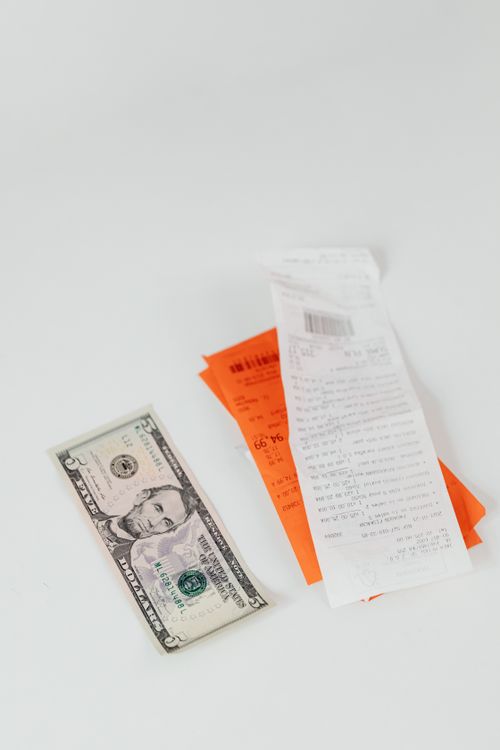
The capture step should take less than five seconds. A photo of the receipt. A single line typed into a running note on your phone, amount and where. Nothing more than that in the moment, no category, no judgment about whether it was a good purchase, just the raw fact of it recorded somewhere it won't get lost.
Once a day, ideally the same time each evening, spend five to ten minutes going through everything captured that day and assigning it to a category. This is where the actual budgeting happens, but because it's happening once, in a calm moment away from the purchase itself, it doesn't carry the friction of doing it live throughout the day.
This split is the entire mechanism. The immediate capture protects the data from being lost or forgotten. The delayed categorization protects your attention from being interrupted constantly throughout the day by a task that doesn't actually need to happen in real time.
What to do about cash and purchases you can't photograph
Not every purchase leaves a paper trail or a card notification. Cash, a payment through an app to a person rather than a business, a purchase where a physical receipt wasn't offered.
For these, the single line note becomes the entire capture method, amount and a few words about what it was, typed the moment it happens or as close to it as possible. The goal isn't a perfect record reconstructed from memory later. It's capturing enough in the moment that the evening categorization session has something accurate to work from, rather than trying to remember three days later whether that twelve dollars was for lunch or for parking.
Why the full detail actually matters, sometimes
A rough category total tells you groceries ran over. Full dollar level detail tells you it was four separate convenience store stops at eight to fifteen dollars each, not one large unavoidable trip, which is a completely different problem with a completely different fix.
This level of detail isn't necessary for everyone, all the time. It becomes genuinely useful during a specific stretch, an aggressive debt payoff where every dollar matters, a month where a category is consistently running over and you need to know exactly why, or simply a period where you want a clear, complete picture rather than an approximation. Full detail tracking is a tool for a specific diagnostic purpose, not a permanent daily requirement for everyone forever.
My free Minimal Monthly Expenses Tracker is where the evening categorization actually lands, categories laid out clearly enough that assigning a day's worth of captured purchases takes minutes rather than requiring you to build a system from scratch each night.
A specific comparison that shows what changes
A hotel housekeeper earning $16.75 an hour wanted to know exactly where her money went after a specific month left her genuinely confused about how her account had run so low despite feeling careful the whole time. She started photographing every receipt the moment she got one and typing a quick line for anything without a receipt, then spent ten minutes most evenings assigning everything to categories.
Two weeks in, the detail revealed something she hadn't expected, not one large problem category, but six or seven small convenience purchases a week, each under ten dollars, that had never shown up as a single obvious expense anywhere. She told me the category total alone would never have shown her that pattern. Only seeing each individual purchase made it visible.
Making this sustainable past the first week
The evening categorization session is the piece most likely to get skipped once the initial motivation fades, which is why keeping it short and specific matters more than making it thorough. Ten minutes, same time each evening, categorizing only what was captured that day, rather than letting several days pile up into a longer session that starts to feel like a chore.
My Simple Monthly Budget Planner Pro tracks each category's running total as you assign purchases to it, so the evening session shows immediately how a day's spending affected the month's numbers, rather than requiring a separate calculation to see the impact.
Frequently asked questions
How do I track every dollar I spend without it becoming overwhelming?
Separate the moment of capturing a purchase from the moment of categorizing it. Capture should take five seconds or less, a photo of a receipt or a quick note with the amount and where. Categorizing happens once a day, during a specific ten minute session away from the purchases themselves. Trying to do both at once, in the moment of spending, is usually what makes full detail tracking feel unsustainable within the first week.
Is it necessary to track every single dollar, or is a rough estimate enough?
For most people, most of the time, a rough category total is genuinely enough to manage a budget day to day. Full dollar level detail becomes useful during a specific stretch, an aggressive debt payoff, a category that's consistently running over without an obvious explanation, or a period where you want complete clarity rather than an approximation. Treating detailed tracking as a tool for a specific purpose, rather than a permanent daily requirement, makes it easier to use when it's actually needed without it becoming exhausting long term.
What should I do about cash purchases when tracking every dollar I spend?
Type a quick note the moment the purchase happens, or as close to it as possible, amount and a few words about what it was. This becomes your capture method for anything that doesn't leave an automatic paper trail. The note doesn't need to be detailed or categorized in the moment, just accurate enough that your evening categorization session has something real to work from rather than requiring you to remember cash purchases from several days earlier.
The $85 that finally made sense
That grocery overage turned out to be exactly what I suspected once I actually looked at the individual purchases instead of the category total, several small convenience stops rather than one large trip, a pattern the rough number alone would never have shown me.
Full detail tracking isn't for every month or every category. When you genuinely need to know not just how much but specifically where, splitting the capture from the categorizing is what makes that level of detail sustainable instead of something you abandon by day four.
When you're ready to see each day's captured purchases turn into running category totals automatically, my is built for that daily rhythm.
Not there yet? Start with my free Minimal Monthly Expenses Tracker for tonight's categorization session, using whatever you've captured today.
Follow on Instagram and Pinterest for weekly money tips for real incomes.
Have you ever had a category total that didn't explain itself until you looked at the individual purchases behind it? Tell me what you found. I have a feeling it wasn't what you expected either.
Comments
Post a Comment