I remember sitting at my kitchen table with $340 in my account, staring at a daycare invoice for $210 and a light bill that was already past due. I did not know yet that a tax credit was waiting for me worth more than that month's whole paycheck. Nobody handed me a list. I found out by accident, from another mom in a Facebook group, two years too late. That is the part that still gets under my skin when I talk to other single moms. The free financial resources for single moms that actually exist, real programs with real money and real help attached, are scattered across a dozen confusing websites and mostly nobody tells you they are there. So here are ten of them. If you already know five, that is still five more dollars in your pocket than you had this morning. Why so many single moms never hear about any of this None of this is because you were not paying attention. Every one of these programs requires you to find it first, prove...
The day the balance crossed $1,000 I didn't do anything special.
I was sitting in my car outside a supermarket, phone in one hand, and I opened the savings app to check something routine. The number was $1,043. I sat there for a minute. Then I put the phone down and went to do the shopping.
It sounds anticlimactic. In the moment it actually was, a little. But the weeks around that number, the ones before and after, felt completely different from any period in the previous four years. Something had changed that wasn't about the amount.
If you're trying to figure out how to save your first $1,000 with nothing to start from, this is the honest version of how it went for me. The timeline, the setbacks, the three things that actually moved the number, and why $1,000 specifically matters more than a larger goal would have at that stage.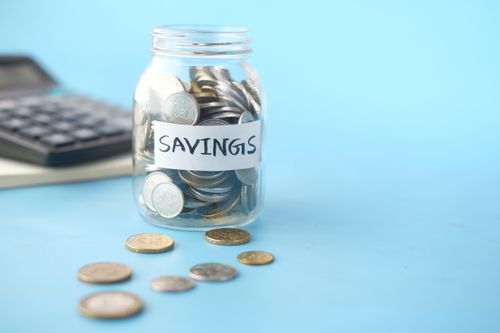
Why $1,000 is the number that changes something
Most people have heard of saving $1,000 as a first milestone. What's less explained is why that number specifically, and not $500 or $2,000.
The answer is that $1,000 is the approximate threshold where minor financial emergencies stop becoming debt. A car repair under $800. An unexpected medical copay. A broken appliance that can't wait. An irregular bill that landed in the worst possible week.
Below $1,000 in savings, those costs almost always end up on a credit card, which adds a minimum payment to the following month, which makes the next tight month tighter, which makes the next emergency more likely to hit the card too. The cycle compounds.
At $1,000, most common single incident emergencies get absorbed instead of amplified. The money covers it, the account dips, and over a few weeks the account refills. The credit card balance doesn't change. That's the whole difference. Not financial security in any deep sense. Just the break in the chain that stops each small crisis from making the next one worse.
It took me eleven months to get there from a starting point of $0. Some months moved fast. Some months went backwards. The eleven months felt long while I was in them and surprisingly short when I looked back.
Starting from actual zero
Month one, I moved $20 into a savings account I'd opened at a bank I didn't normally use. I did this on a Thursday, which was not payday but was a day I'd read something that annoyed me into action.
The account had $0 before I moved the $20. It had $20 after. I checked it again on Saturday to confirm it was still there. It was still there.
I'm sharing that detail because if you've tried to save before and always pulled the money back out, the problem might not be the amount. It might be the account. Money that's in the same place as the money you spend will eventually get spent. Money that requires a different login, a different bank, and two business days to access has a different relationship with your brain. It becomes less like spending money and more like a separate thing that exists for a specific reason.
The $20 survived the first month. I moved $25 the following month. Not because things were suddenly easier. Because the $20 hadn't died, which made $25 feel possible.
The three things that actually built the fund
Over eleven months, the $1,000 came from three sources that I didn't anticipate would be the main contributors when I started.
The first was the subscription audit. I went through two months of bank statements in month two and found $47 in recurring charges I wasn't actively using. Not dramatic. Just a premium app tier I'd never downgraded, a streaming service I'd forgotten, and a small charge I couldn't even identify when I searched for it. Those $47 went straight to the savings account from that month forward.
The second was one off sales. Over the eleven months I sold four things: a piece of furniture I'd been storing in a corner for two years, two bags of outgrown kids' clothes through a local selling group, and an old phone that had been in a drawer since I'd upgraded. Combined total: $218. None of those sales were planned. Each time I got the money I transferred the whole amount to the savings account the same day, before I had time to think of somewhere else it could go.
The third, which surprised me most, was the grocery ceiling. I set a hard grocery ceiling in month three based on my real average from the statements rather than my optimistic estimate, and it actually held. The difference between what I'd been spending and the ceiling was about $35 a month. That $35 went to savings automatically. Not a huge amount. But $35 a month for eight months is $280, which was the gap between $700 and almost $1,000.
My free Minimalist Budget Planner is where I put the whole picture together at the start of this. Income, fixed bills, real averages for groceries and transport, savings line at the top before anything else. Free to download and the clearest starting point for seeing what you're actually working with.
The month it went backwards
Month six, the fund had reached $610. Then the boiler in the rented flat needed a part and the landlord took three weeks to fix it. I ran two small electric heaters for those three weeks and the electricity bill came in $140 over the normal amount.
The $140 came out of savings. The fund dropped to $470.
I remember looking at the app and doing a mental calculation of how many months it had taken to build from $0 to $610, and then a different mental calculation of how many more months it would take to get back to $610, and then past it to $1,000. The number of months felt suddenly very large.
I kept the automatic transfer running. Twenty five dollars a month, same as it had been. I didn't increase it dramatically to compensate. I just kept it running and let the fund rebuild at the pace it had always been rebuilding.
It was back to $610 in month nine. Past $1,000 in month eleven.
The month it went backwards wasn't a failure of the system. It was the system working exactly as it was supposed to: the savings absorbed the hit instead of the credit card.
What the $1,000 changed
When the fund hit $1,000 I made a list of things I'd put on a credit card in the previous twelve months that I could have paid from savings instead.
The list was shorter than I expected. Most of the emergencies that had landed on the card in previous years hadn't actually been that big. A $240 car repair. A $90 medical copay. A $150 appliance. None of those would have broken a $1,000 fund. They would have dented it and the fund would have rebuilt.
The credit card balance from those charges, though, plus the interest over the following months, plus the higher minimum payments that had compressed the budget in every subsequent month, was considerably more than $480. The compound effect of having no buffer is not just the emergency cost. It's all the downstream costs of putting the emergency on credit.
Saving $1,000 doesn't just cover the next emergency. It stops the next emergency from becoming three months of tighter budget.
When you're ready to track savings progress alongside your full monthly budget in one place, my Simple Monthly Budget Planner Pro shows the savings balance building month by month with visual charts that sit right next to the spending categories. Watching the line move is what kept me going in the months where the progress felt slow.
Frequently asked questions
How long does it actually take to save $1,000 from nothing?
It depends on the income, the fixed costs, and how much can consistently move to savings each month. At $25 a month it takes over three years, which sounds discouraging until you factor in the one off contributions that almost always speed things up: sold items, found subscription money, a tax refund, a higher month at work. Most people who start from zero and are genuinely consistent reach $1,000 in nine to eighteen months. The people who get there in less time usually had a one off contribution that compressed the timeline, not a dramatically higher monthly transfer.
Should I save $1,000 or pay off debt first?
Save the $1,000 first, or build it in parallel with minimum debt payments. The reason this matters practically: if you put everything toward debt with zero savings and the next emergency hits, the emergency lands back on the card. The balance goes up. The progress reverses. A $1,000 buffer lets you absorb emergencies without touching the debt payoff momentum. Once the $1,000 is in place and genuinely protected, any amount above minimum payments goes to the debt with the smallest balance.
What if I save the money and then spend it on something that wasn't an emergency?
This is worth being honest about because it happens. The fix isn't willpower. It's structural. The savings account should be at a different bank from the one you spend from. It should have no linked debit card. Accessing it should take two business days and a separate login. When those conditions exist, spending the savings on a not an emergency requires a specific series of actions rather than just a tap on the phone. Most impulse decisions don't survive that friction. The two day wait is usually enough time to find another way.
$1,043 outside the supermarket
I did the shopping. Came back out. Started the car.
Then I took the phone out again and sent a screenshot of the balance to nobody, because there was nobody to send it to who would understand what the number meant. So I just looked at it again for a moment and then drove home.
That's what the first $1,000 looked like. Not a celebration. Just a number that meant something had changed. The next emergency that hits, whatever it is, won't go on a credit card. It'll come out of the savings, the fund will rebuild, and nothing downstream will compound.
Start this week with the automatic transfer. Whatever amount feels almost too small. Move it to a different bank. Leave it there.
When you're ready to track the savings milestone alongside the full budget in one system, my Simple Monthly Budget Planner Pro makes the progress visible every month.
Not there yet? Start with my free Minimalist Budget Planner. It's where I started: one page, real numbers, ten minutes.
Follow on Instagram and Pinterest for weekly savings tips that work on real incomes.
What would you do differently if the next emergency didn't have to go on a card? Drop it in the comments. That answer is the reason the $1,000 matters.
Comments
Post a Comment